
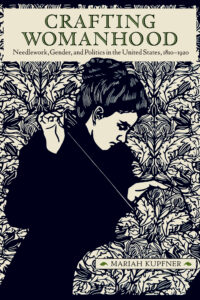
Crafting Womanhood: Needlework, Gender, and Politics in the United States, 1810-1920
Decorative needlework was a key medium through which American women constructed femininity and its relationship to public and political concerns in the nineteenth and early twentieth centuries. Through samplers, needlecases, lace coats, silk sofas, cotton scraps, banners, and other textile things, scholars can see the ways in which women and girls related to education, property-holding, […]

The Fenwick Letters: A Transnational Feminist Life Reconstructed, Volume II: 1822-1840
The second of this two-volume edition of The Fenwick Letters covers the North American phase of Eliza Fenwick’s transformative, transnational odyssey, from 1822 to 1840. Although no longer the radical author she was in the 1790s, advocating for the rights of women to be educated, or the innovative author of children’s books that she was […]
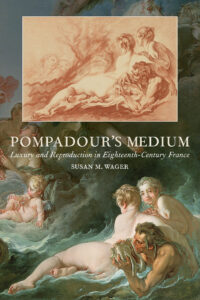
Pompadour's Medium: Luxury and Reproduction in Eighteenth-Century France
Pompadour’s Medium reveals the depth of patron, amateur artist, and royal mistress Madame de Pompadour’s contributions to the visual arts, long dismissed as superficial and trivial. Her artistic activities centered on an innovative exploration of the relationships between painting, sculpture, and the decorative arts at a moment when advances in reproductive printmaking threatened to flatten […]
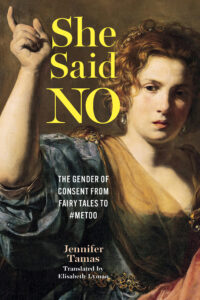
She Said No: The Gender of Consent from Fairy Tales to #MeToo
She Said NO investigates the gender inequality in the authority to speak—and therefore to refuse—that prevailed in the establishment and interpretation of the French classics. By selecting authors deemed essential to French cultural heritage and erasing the works of women writers, this biased canon has systematically undervalued female agency—even in well-known works by both men […]
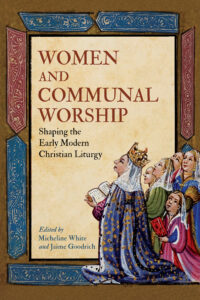
Women and Communal Worship: Women Performing, Shaping, and Writing the Christian Liturgy, 1500–1750
Women and Communal Worship advances our understanding of early modern women by uncovering and analyzing Christian women’s engagement with liturgical and communal worship between 1500 and 1750. The Protestant attack on the medieval liturgy was at the heart of the Reformation and Counter-Reformation, but women’s contributions to those momentous changes have been largely overlooked as […]